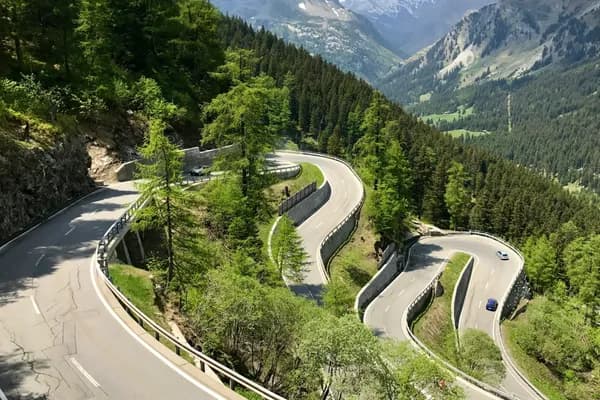
Driving in Italy from the UK: ZTL zones, documents, tolls and fines
 A. FruchardCo-founder & CEOLast updated: 4 November 2026
What do UK drivers need for driving in Italy?
Driving in Italy from the UK takes a photocard licence and your vehicle papers, and GOV.UK says a UK photocard holder does not need an international driving permit. What catches British drivers out is the ZTL, a restricted traffic zone in many city centres where entering without a pass is fined.
Each rule below was read on 3 November 2026 at the body that sets it: GOV.UK for what a British driver carries, and the Automobile Club d'Italia (ACI), which publishes the text of the Italian Highway Code, for speeds, fines and equipment. Italian fines are set in euros, so each one is followed by its value in pounds.
Italy asks three things of a visiting driver. The paperwork is short. The zones are where the surprises are, because a city centre can be closed to your car without a barrier in sight. And the fines follow a procedure that differs from a British one, since a foreign driver may be asked to pay before driving on.
- UK photocard licenceGreat Britain or Northern IrelandWhat the official page saysYou can use a UK photocard driving licence to drive in ItalyWhere it comes fromGOV.UK, Italy travel advice
- Paper licenceOlder styleWhat the official page saysYou may need to update it to a photocard licence, or carry the correct version of the IDP as wellWhere it comes fromGOV.UK, Italy travel advice
- International driving permitItaly is listed under the 1968 typeWhat the official page saysYou do not need an IDP if you hold a UK, Gibraltar, Guernsey, Jersey or Isle of Man photocard licenceWhere it comes fromGOV.UK, IDP country table
- Log book (V5C)Your own carWhat the official page saysTake it with you if you are driving your own vehicle abroadWhere it comes fromGOV.UK, Driving abroad
- VE103 certificateHired or leased in the UKWhat the official page saysNeeded for a vehicle you have hired or leased in the UK and take abroadWhere it comes fromGOV.UK, Driving abroad
- UK stickerOn the rear of the carWhat the official page saysCheck whether you need one to drive your car outside the UKWhere it comes fromGOV.UK, Italy travel advice
What to carry | What the official page says | Where it comes from |
|---|---|---|
UK photocard licence Great Britain or Northern Ireland | You can use a UK photocard driving licence to drive in Italy | GOV.UK, Italy travel advice |
Paper licence Older style | You may need to update it to a photocard licence, or carry the correct version of the IDP as well | GOV.UK, Italy travel advice |
International driving permit Italy is listed under the 1968 type | You do not need an IDP if you hold a UK, Gibraltar, Guernsey, Jersey or Isle of Man photocard licence | GOV.UK, IDP country table |
Log book (V5C) Your own car | Take it with you if you are driving your own vehicle abroad | GOV.UK, Driving abroad |
VE103 certificate Hired or leased in the UK | Needed for a vehicle you have hired or leased in the UK and take abroad | GOV.UK, Driving abroad |
UK sticker On the rear of the car | Check whether you need one to drive your car outside the UK | GOV.UK, Italy travel advice |
Every guide on hellosafe.co.uk is written from official sources: GOV.UK and the Foreign, Commonwealth & Development Office, and the embassies and immigration services of each destination. Each fact is checked on the date shown under its table, and the page is updated when a rule changes. No airline, tour operator or visa service pays for a place in our guides.
Learn moreIs an IDP or a UK sticker needed to drive in Italy?
No permit, if your licence is a photocard. The GOV.UK international driving permit page puts Italy in its 1968 group and says a UK photocard holder does not need an IDP there. A paper licence is the exception, and GOV.UK says to swap it for a photocard or carry the right IDP. Our guide to the international driving permit explains the three types and where to get one.
If you are hiring a car, GOV.UK warns that hire companies often have stricter requirements than the law, such as a minimum age, driving experience or an IDP. The GOV.UK driving abroad page says the company may ask for your licence details, which you can share with a licence check code obtained up to 21 days before the trip.
The sticker rule depends on your number plate. GOV.UK travel advice for Italy tells you to check whether you need a UK sticker, and the GOV.UK number plate rules set out when a plate with the UK identifier makes one unnecessary.
What is a ZTL and how do you avoid a fine in Italy?
A ZTL, short for zona a traffico limitato, is a limited traffic zone that private cars may not enter without a pass. GOV.UK travel advice for Italy says you need a pass to drive into the historic centre of many Italian cities in a private or hire car, and that the boundaries are usually marked with the letters ZTL in black on a yellow background. Pass the sign without a pass and you will be fined.
The rule is national but each town draws its own zone. The Highway Code article on traffic zones lets a council mark out pedestrian areas and limited traffic zones by a decision of its executive, and charge for entry to them. Breaking the ban in a ZTL, a pedestrian area or a bus lane carries a fine of €83 to €332 (about £69 to £280). The hours, cameras and permit rules of a given town are not in the national text, so they are the council's to publish.
- Historic centre of many citiesPrivate and hire carsWhat the source saysA pass is needed; the boundary is marked ZTL in black on yellowWhere it comes fromGOV.UK, Italy travel advice
- Any ZTL, pedestrian area or bus laneBreaking the banWhat the source saysFine of €83 to €332 (about £69 to £280)Where it comes fromACI, Highway Code article 7
- Rome, green bandFascia verdeWhat the source saysCertain vehicles are not allowed on the roads in the areaWhere it comes fromGOV.UK, Italy travel advice
- Milan city centreCongestion chargeWhat the source saysThere is a congestion charge; GOV.UK gives no price and points to the city councilWhere it comes fromGOV.UK, Italy travel advice
Where | What the source says | Where it comes from |
|---|---|---|
Historic centre of many cities Private and hire cars | A pass is needed; the boundary is marked ZTL in black on yellow | GOV.UK, Italy travel advice |
Any ZTL, pedestrian area or bus lane Breaking the ban | Fine of €83 to €332 (about £69 to £280) | ACI, Highway Code article 7 |
Rome, green band Fascia verde | Certain vehicles are not allowed on the roads in the area | GOV.UK, Italy travel advice |
Milan city centre Congestion charge | There is a congestion charge; GOV.UK gives no price and points to the city council | GOV.UK, Italy travel advice |
Rome and Milan show the two kinds of restriction. Rome limits certain vehicles in its green band, and GOV.UK sends drivers to the Rome municipality, whose mobility agency publishes its rules at Roma Servizi per la Mobilita. Milan charges for the centre instead of closing it. We give no charge, because the one source we read does not.
A hired car does not remove the risk. We found no official source describing how a fine for a ZTL entry reaches a driver after the car has gone back, so this guide does not describe it. Ask the hire company how it handles a fine before you sign, and read its contract.
- Check the hotel's address
Ask the hotel whether its street is inside a ZTL, before you book. - Look for the sign
The yellow board with ZTL in black marks the edge, and it is the sign that counts, not your route. - Park outside and walk in
A car park beyond the boundary avoids the question altogether. - Keep your route to the motorway
Zones belong to town centres, not to the autostrada.
How do Italian motorway tolls work?
Italy's autostrade are toll roads. The operator Autostrade per l'Italia lists five ways to pay a toll: electronic toll collection, credit card, a prepaid Viacard, a rechargeable Telepass, and cash. It publishes no price list on the page we read, and we give no toll price here, because a tariff differs by stretch and changes.
The part worth knowing is the unpaid toll. The operator's unpaid toll FAQ says an unpaid toll ticket can be paid without further fees within 15 days from the date of issue. After that the amount is increased by administration fees, and unpaid debts can face enforced recovery. You can pay online in the Customer Services section of its website without registering, and the page also lists its app and Mooney points.
The page does not say whether a foreign-registered car is treated differently, and it covers one operator only. Check the operator of the stretch you drive, and use its own website to pay.
What are the speed limits in Italy?
For a car, the maximum is 130 km/h on a motorway, 110 km/h on a main road outside towns, 90 km/h on other roads outside towns and 50 km/h inside a built-up area. These are the figures in article 142 of the Highway Code, and a sign can show a lower one. In rain, the motorway limit falls to 110 km/h and the main-road limit to 90 km/h.
- MotorwayAutostradaLimit for a car130 km/hIn mph (about)81 mphIn rain110 km/h (68 mph)
- Main road outside townsStrada extraurbana principaleLimit for a car110 km/hIn mph (about)68 mphIn rain90 km/h (56 mph)
- Other roads outside townsSecondaria and localLimit for a car90 km/hIn mph (about)56 mphIn rainNot given in the text we read
- Built-up areaCentro abitatoLimit for a car50 km/hIn mph (about)31 mphIn rainNot given in the text we read
Type of road | Limit for a car | In mph (about) | In rain |
|---|---|---|---|
Motorway Autostrada | 130 km/h | 81 mph | 110 km/h (68 mph) |
Main road outside towns Strada extraurbana principale | 110 km/h | 68 mph | 90 km/h (56 mph) |
Other roads outside towns Secondaria and local | 90 km/h | 56 mph | Not given in the text we read |
Built-up area Centro abitato | 50 km/h | 31 mph | Not given in the text we read |
The same article lets the owner of a three-lane motorway raise the limit to 150 km/h (about 93 mph), but only where approved average-speed equipment is installed and traffic, weather and five years of accident data allow it. You will know it by the sign.
What you pay for exceeding a limit is set in bands, and the bands matter because the penalty changes the licence as well as the wallet.
- Up to 10 km/hAbout 6 mphFine€42 to €173 (about £35 to £140)Licence suspensionNone stated
- 10 to 40 km/hUp to about 25 mphFine€173 to €694 (about £140 to £580)Licence suspensionTwice in a year inside a built-up area: €220 to €880 (about £180 to £740) and 15 to 30 days
- 40 to 60 km/hUp to about 37 mphFine€543 to €2,170 (about £450 to £1,810)Licence suspension1 to 3 months
- More than 60 km/hOver about 37 mphFine€845 to €3,382 (about £710 to £2,830)Licence suspension6 to 12 months
Over the limit by | Fine | Licence suspension |
|---|---|---|
Up to 10 km/h About 6 mph | €42 to €173 (about £35 to £140) | None stated |
10 to 40 km/h Up to about 25 mph | €173 to €694 (about £140 to £580) | Twice in a year inside a built-up area: €220 to €880 (about £180 to £740) and 15 to 30 days |
40 to 60 km/h Up to about 37 mph | €543 to €2,170 (about £450 to £1,810) | 1 to 3 months |
More than 60 km/h Over about 37 mph | €845 to €3,382 (about £710 to £2,830) | 6 to 12 months |
Do you have to pay an Italian fine on the spot?
You may be asked to. Article 207 of the Highway Code covers vehicles registered abroad. The driver can pay the reduced amount straight away to the officer, who gives a receipt noted on the copy of the report. A driver who does not pay must leave a deposit instead, and if it is not paid the car is immobilised until it is, for no more than 60 days, at the responsible person's cost.
The size of the deposit depends on where the car is registered. For a car registered outside the EU and EEA, the text sets it at half of the maximum fine for the offence. For one registered in an EU or EEA state, it is the same sum as the reduced payment. The text does not name the UK, but a UK car is not registered in an EU state, so the half-of-maximum rule is the one that reads as applying to it. The article gives no euro amounts, because they depend on the offence.
- Using a phone while drivingPhone, smartphone or similar deviceFine€250 to €1,000 (about £210 to £840)Other penaltyLicence suspension of 15 days to 2 months
- Phone again within two yearsFine€350 to €1,400 (about £290 to £1,170)Other penaltyLicence suspension of 1 to 3 months
- Entering a ZTL without a passAlso pedestrian areas and bus lanesFine€83 to €332 (about £69 to £280)Other penaltyNone stated
Offence | Fine | Other penalty |
|---|---|---|
Using a phone while driving Phone, smartphone or similar device | €250 to €1,000 (about £210 to £840) | Licence suspension of 15 days to 2 months |
Phone again within two years | €350 to €1,400 (about £290 to £1,170) | Licence suspension of 1 to 3 months |
Entering a ZTL without a pass Also pedestrian areas and bus lanes | €83 to €332 (about £69 to £280) | None stated |
The phone ban in the Highway Code covers any device that takes the driver's hands off the wheel, even for a moment.
What must you carry and switch on in Italy?
Article 162 governs the triangle and the vest. Outside built-up areas, a vehicle stopped on the carriageway must be warned of with the triangle if it is night and the rear lights or hazard lights are not working, or at any time if other drivers cannot see it from far enough away. The article says that without a triangle the driver must signal the hazard effectively some other way. It speaks of using a triangle, so carrying one is the cautious reading.
The vest has its own rule. A driver may not get out and walk on the road without a retroreflective vest, even on an emergency lane, and that includes the person who sets out the triangle. Separately, article 152 requires dipped headlights while driving outside built-up areas, day and night.
- Warning triangleStopped car outside townsWhat the Highway Code saysUse it when the car is not visible enough or the lights fail at nightFine€42 to €173 (about £35 to £140)
- Reflective vestWhen leaving the car on the roadWhat the Highway Code saysWear it before you walk on the road, even on an emergency laneFine€42 to €173 (about £35 to £140)
- Dipped headlightsOutside built-up areasWhat the Highway Code saysOn while driving, in daylight tooFine€42 to €173 (about £35 to £140)
- Winter tyres or snow chainsBy local ordinanceWhat the Highway Code saysThe road owner may require them by ordinance, or winter tyres only when heavy snow is forecast outside townsFineNot stated in the text we read
Item | What the Highway Code says | Fine |
|---|---|---|
Warning triangle Stopped car outside towns | Use it when the car is not visible enough or the lights fail at night | €42 to €173 (about £35 to £140) |
Reflective vest When leaving the car on the road | Wear it before you walk on the road, even on an emergency lane | €42 to €173 (about £35 to £140) |
Dipped headlights Outside built-up areas | On while driving, in daylight too | €42 to €173 (about £35 to £140) |
Winter tyres or snow chains By local ordinance | The road owner may require them by ordinance, or winter tyres only when heavy snow is forecast outside towns | Not stated in the text we read |
For the winter rule, article 6 makes it the road owner's decision, announced by ordinance and signs. It sets no national dates, so read the signs on the mountain road you take.
What is the drink-drive limit in Italy?
The limit is 0.5 g of alcohol per litre of blood. Article 186 sets the penalties in three bands above it. A separate rule, article 186-bis, sets a zero limit for drivers under 21, for drivers in their first three years with a category B licence, and for professional drivers.
- Above 0.5 and up to 0.8 g/lFine€543 to €2,170 (about £450 to £1,810)Other penaltyLicence suspension of 3 to 6 months
- Above 0.8 and up to 1.5 g/lFine€800 to €3,200 (about £670 to £2,670)Other penaltyArrest of up to 6 months; suspension of 6 months to 1 year
- Above 1.5 g/lFine€1,500 to €6,000 (about £1,250 to £5,010)Other penaltyArrest of 6 months to 1 year; suspension of 1 to 2 years
- Zero-limit driversAbove 0 and up to 0.5 g/lFine€168 to €672 (about £140 to £560), doubled if you cause an accidentOther penaltyNone stated
Blood alcohol | Fine | Other penalty |
|---|---|---|
Above 0.5 and up to 0.8 g/l | €543 to €2,170 (about £450 to £1,810) | Licence suspension of 3 to 6 months |
Above 0.8 and up to 1.5 g/l | €800 to €3,200 (about £670 to £2,670) | Arrest of up to 6 months; suspension of 6 months to 1 year |
Above 1.5 g/l | €1,500 to €6,000 (about £1,250 to £5,010) | Arrest of 6 months to 1 year; suspension of 1 to 2 years |
Zero-limit drivers Above 0 and up to 0.5 g/l | €168 to €672 (about £140 to £560), doubled if you cause an accident | None stated |
The zero-limit rule says the first three years after getting a category B licence, and does not say how that applies to a licence issued abroad. A newly qualified British driver should treat the limit as zero.
What should you check before driving to Italy?
Start with the licence and the car's papers, then the places you will sleep, because the ZTL question is decided by the hotel's street. Our driving abroad guide covers what applies in every country. GOV.UK travel advice for Italy is where to check for changes before you leave, and the main GOV.UK page for Italy carries the latest warnings.
- Licence
A photocard, or a paper licence swapped or backed by the right IDP. - Car papers
The V5C for your own car, the VE103 for a hired or leased one. - Hotel and parking
Whether the street is inside a ZTL, and where the car will sleep. - Triangle and vest
Both within reach, not in the boot under the luggage. - Tolls
A card for the booths, and a note of the 15-day window for an unpaid ticket. - Hire car
The company's rules on age, licence checks and fines.
Driving in Italy: your questions answered
Not with a UK photocard licence. GOV.UK says you do not need an IDP if you hold a UK photocard licence, and lists Italy under the 1968 type. If you have a paper licence, swap it for a photocard or carry the right IDP, and check with the hire company if you are renting.
It stands for zona a traffico limitato, a limited traffic zone. GOV.UK says you need a pass to drive into the historic centre of many Italian cities in a private or hire car, and that the boundary is marked with ZTL in black on a yellow background.
The Highway Code sets a fine of €83 to €332 (about £69 to £280) for breaking the ban in a ZTL, a pedestrian area or a bus lane. Each town sets its own zone and hours, so check the council’s page before you go.
Not freely. GOV.UK says certain vehicles are not allowed in Rome’s green band, and that Milan has a congestion charge for the city centre. Many historic centres are ZTLs, so ask your hotel and read the city’s own rules.
130 km/h for a car, about 81 mph, falling to 110 km/h in rain. Some three-lane motorways with approved average-speed equipment can allow 150 km/h, shown by signs.
A driver of a foreign-registered car can pay the reduced amount to the officer and get a receipt. If you do not, the Highway Code asks for a deposit, and the car can be immobilised for up to 60 days until it is paid.
0.5 g of alcohol per litre of blood. Above it the fine starts at €543 (about £450) with a licence suspension. Drivers under 21, those in their first three years with a category B licence and professional drivers have a zero limit.
Wear one if you get out and walk on the road, even on an emergency lane. The Highway Code sets a fine of €42 to €173 (about £35 to £140) for breaking the rule.
Autostrade per l’Italia says an unpaid toll ticket can be paid without further fees within 15 days from the date of issue, and online without registering. After that, administration fees are added.
Only where the road owner requires them. The Highway Code lets the owner order winter tyres or chains by ordinance, shown on signs, and sets no national dates.
On the same topic

Driving in Portugal from the UK: electronic tolls, documents and rules
4 Nov 2026
Driving in Germany from the UK: the emission sticker and the rules
4 Nov 2026

Crit'Air sticker for UK drivers: cities, price and how to order
29 Oct 2026