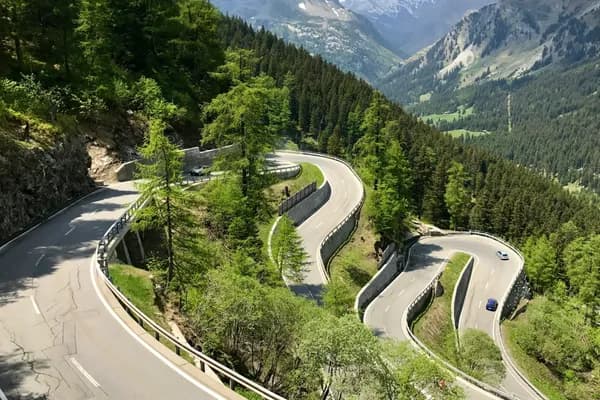
Driving in Spain from the UK: documents, V16 beacon, speed limits and fines
 A. FruchardCo-founder & CEOLast updated: 5 November 2026
What do you need for driving in Spain from the UK?
Driving in Spain from the UK takes a photocard licence, your vehicle papers, a UK sticker unless your plate already shows the UK identifier, and a way to mark a broken-down car. Since 1 January 2026 Spain's traffic authority treats the connected V16 beacon as the only legal signal for a stopped car, but it lets foreign-registered cars use a warning triangle instead. GOV.UK says you do not need an international driving permit, though the DGT's foreign-driver page reads differently, as explained below.
Each rule below was read on the page of the authority that sets it, on 3 November 2026: GOV.UK for what a British driver carries, and the Spanish traffic authority, the Dirección General de Tráfico (DGT), for the beacon, the limits, the fines and the foreign-driver guide. Fines are set in euros, so each one is followed by its value in pounds.
Spain asks three different things of you. The first is paperwork, which is the same on every trip. The second is what happens when your car stops, which changed in 2026 and is where British drivers are most likely to be caught out. The third is what depends on the road you take: a city with a low-emission zone, a toll motorway, or a stretch with a speed camera.
- UK photocard licenceGreat Britain or Northern IrelandWhat the official page saysYou can use a UK photocard driving licence to drive in Spain; provisional licences are not validWhere it comes fromGOV.UK, Spain travel advice
- Identity documentAlongside the licenceWhat the official page saysYou must carry a valid driving licence and IDWhere it comes fromGOV.UK, Spain travel advice
- Log book (V5C)Your own carWhat the official page saysTake it with you if you are taking your own vehicle, together with the certificate GOV.UK lists with itWhere it comes fromGOV.UK, Driving abroad
- VE103 certificateHired or leased in the UKWhat the official page saysNeeded for a vehicle you have hired or leased in the UK and take abroadWhere it comes fromGOV.UK, Driving abroad
- UK stickerOn the rear of the carWhat the official page saysYou may need one to drive a UK-registered car outside the UK; check your plate against the GOV.UK rulesWhere it comes fromGOV.UK, Spain travel advice
- International driving permitIDP type for Spain: 1949What the official page saysYou do not need an IDP; if you are hiring a car, check whether the hire company says you doWhere it comes fromGOV.UK, IDP country table
- Beacon or triangleFor a stopped carWhat the official page saysA connected V16 beacon in a car registered in Spain; a triangle is accepted on a foreign-registered carWhere it comes fromDGT, V16 page and emergency guide
What to carry | What the official page says | Where it comes from |
|---|---|---|
UK photocard licence Great Britain or Northern Ireland | You can use a UK photocard driving licence to drive in Spain; provisional licences are not valid | GOV.UK, Spain travel advice |
Identity document Alongside the licence | You must carry a valid driving licence and ID | GOV.UK, Spain travel advice |
Log book (V5C) Your own car | Take it with you if you are taking your own vehicle, together with the certificate GOV.UK lists with it | GOV.UK, Driving abroad |
VE103 certificate Hired or leased in the UK | Needed for a vehicle you have hired or leased in the UK and take abroad | GOV.UK, Driving abroad |
UK sticker On the rear of the car | You may need one to drive a UK-registered car outside the UK; check your plate against the GOV.UK rules | GOV.UK, Spain travel advice |
International driving permit IDP type for Spain: 1949 | You do not need an IDP; if you are hiring a car, check whether the hire company says you do | GOV.UK, IDP country table |
Beacon or triangle For a stopped car | A connected V16 beacon in a car registered in Spain; a triangle is accepted on a foreign-registered car | DGT, V16 page and emergency guide |
Every guide on hellosafe.co.uk is written from official sources: GOV.UK and the Foreign, Commonwealth & Development Office, and the embassies and immigration services of each destination. Each fact is checked on the date shown under its table, and the page is updated when a rule changes. No airline, tour operator or visa service pays for a place in our guides.
Learn moreWhich documents will a Spanish police officer ask for?
The licence, the car's papers and your identity. The DGT guide for foreign drivers says the first documents an officer asks for are the driving licence, the circulation permit and the vehicle's technical sheet, and that they should be originals or certified copies. For a British car, the equivalent of the first two is your V5C log book.
The age rule is the one a young driver or a hire customer meets first. GOV.UK says you must be 18 to drive a car, or a motorcycle over 125cc, in Spain. Provisional licences are not valid, and a paper licence may need to be swapped for a photocard before you travel.
The permit question has two official answers, and they do not read the same. GOV.UK's table for Spain says you do not need an IDP and puts Spain among the 1949-convention countries. The DGT's foreign-driver page says that licences from outside the EU and the European Economic Area need an international permit, carried with a passport or identity card. Our guide to the international driving permit explains the types. If you want certainty before a long drive, ask the DGT or your hire company, because the hire company's rule is the one that decides whether you get the keys.
If you hire a car, GOV.UK says hire companies often ask for more than the law does, such as a minimum age or time behind the wheel, and may ask for your licence details. You can share them with a licence check code that you get up to 21 days before the trip. The GOV.UK driving abroad page has the full list, and the GOV.UK number plate rules tell you whether your plate needs a UK sticker.
Do UK drivers need a V16 beacon in Spain?
Not necessarily. Since 1 January 2026 the DGT says the connected V16 is the only legal device for marking a stopped vehicle in Spain, and that it replaces triangles. But the DGT also says vehicles registered in other countries and driving in Spain in international traffic may keep using triangles. The beacon is a rule for cars registered in Spain.
The DGT V16 page describes the V16 as a small yellow flashing beacon with a connection: when you switch it on, it sends your position to the DGT 3.0 platform. You put it on the highest point of the car, so you do not have to walk along the carriageway to place a triangle. Not carrying one is a minor offence with a fine of €80 (about £67).
- Registered in SpainMost hire cars collected in SpainWhat the DGT says you may useThe connected V16 beacon, which replaced triangles on 1 January 2026Where it comes fromDGT, V16 page and press note of 25 November 2025
- Registered in another countryA UK car driven overWhat the DGT says you may useTriangles, or any similar device used in the country of registration, while in international trafficWhere it comes fromDGT, V16 page, section on validity inside and outside Spain
- Spanish car driven abroadFor comparisonWhat the DGT says you may useThe V16 beacon, which the DGT says can be used outside SpainWhere it comes fromDGT, V16 page
Your car | What the DGT says you may use | Where it comes from |
|---|---|---|
Registered in Spain Most hire cars collected in Spain | The connected V16 beacon, which replaced triangles on 1 January 2026 | DGT, V16 page and press note of 25 November 2025 |
Registered in another country A UK car driven over | Triangles, or any similar device used in the country of registration, while in international traffic | DGT, V16 page, section on validity inside and outside Spain |
Spanish car driven abroad For comparison | The V16 beacon, which the DGT says can be used outside Spain | DGT, V16 page |
Two points are not settled by the DGT pages we read. The first is what a UK car should carry, because the DGT says to use the device required in your home country and a UK car is not required to carry a triangle at home. A triangle is the device the DGT names for foreign cars, so carrying one is the cautious choice. The second is the hire car: the carve-out is for vehicles registered abroad, so a car registered in Spain is not covered by it. Look in the boot for the beacon before you leave the car park.
Be careful with what you read online. The DGT's own note gives the fine as €80 and calls claims of fines of up to €30,000 false. Some news reports quote €200, which is not the figure the DGT gives.
What should you do if your car breaks down in Spain?
Signal the car, get out on the side away from the traffic wearing your reflective vest, and wait behind the barrier or off the carriageway. That is the order the DGT's emergency guide gives. In Spain the signal is the V16 beacon; if you do not have one, it says to use the equivalent device from your own country, such as a warning triangle.
- Signal the car
Switch on the hazard lights and use the V16 beacon, or a triangle on a foreign-registered car. - Wear the vest
Put it on before you step out, and leave by the side with no traffic. - Wait in a safe place
Stand behind the protective barrier, or off the carriageway altogether. - Call for help
112 is the general emergency number, 062 the Guardia Civil, 091 the Policía Nacional and 092 the local police.
After an accident the DGT gives three steps, protect, alert and assist, in that order. Protect yourself first, then alert the road and health services if someone needs them, then help the injured by following the instructions of the 112 operator. GOV.UK gives 112 as the number for the emergency services across Spain.
What are the speed limits in Spain?
For a car, the general limit is 120 km/h on a motorway or dual carriageway, 90 km/h on a conventional road, and between 20 and 50 km/h in a town depending on the street. The DGT says the operator of a conventional road can raise its limit to 100 km/h, and a town can lower a limit with a sign.
- Motorway or dual carriagewayAutopista, autovíaGeneral limit for a car120 km/hIn mph (about)75 mph
- Conventional roadCarretera convencionalGeneral limit for a car90 km/h, up to 100 km/h where the road operator sets itIn mph (about)56 to 62 mph
- Town street with two or more lanes each wayGeneral limit for a car50 km/hIn mph (about)31 mph
- Town street with one lane each wayGeneral limit for a car30 km/hIn mph (about)19 mph
- Street with one shared surface for cars and pedestriansGeneral limit for a car20 km/hIn mph (about)12 mph
Type of road | General limit for a car | In mph (about) |
|---|---|---|
Motorway or dual carriageway Autopista, autovía | 120 km/h | 75 mph |
Conventional road Carretera convencional | 90 km/h, up to 100 km/h where the road operator sets it | 56 to 62 mph |
Town street with two or more lanes each way | 50 km/h | 31 mph |
Town street with one lane each way | 30 km/h | 19 mph |
Street with one shared surface for cars and pedestrians | 20 km/h | 12 mph |
The urban change is the one a driver with older knowledge of Spain misses. Since 11 May 2021, a street with one lane in each direction is limited to 30 km/h. The DGT article on the urban limits also sets 20 km/h for streets where the road and the pavement are one surface. A town can set a different figure with a sign.
The DGT's generic-limits article gives 90 km/h for cars on a conventional road, with up to 100 km/h where the operator sets it. Speed cameras in Spain come in four kinds, according to the DGT's page on other points of interest: fixed, section (which reads your plate at the start and end of a stretch to work out your average speed), mobile and aerial.
How much are driving fines in Spain, and how do you pay?
A speeding fine runs from €100 (about £84) to €600 (about £500), with 2 to 6 points off a Spanish licence, according to the DGT's page on types of offences and fines. What matters to a visitor is how it is paid. The DGT's leaflet on the traffic rules says that if an officer tells you of an offence and you cannot show you are resident in Spain, you must pay or deposit the amount of the fine before you can drive on.
- SpeedingDepends on the speed over the limitFine€100 to €600 (about £84 to £500)Points2, 4 or 6Where it comes fromDGT, offences and fines
- Mobile phone in the handOr headphones while drivingFine€200 (about £170)Points3 to 6Where it comes fromDGT, offences and fines
- No seatbeltAny seat, belt not fastened correctlyFine€200 (about £170)Points4Where it comes fromDGT, offences and fines
- Alcohol above the limitSee the next sectionFine€500 to €1,000 (about £420 to £840)Points4 to 6Where it comes fromDGT, offences and fines
Offence | Fine | Points | Where it comes from |
|---|---|---|---|
Speeding Depends on the speed over the limit | €100 to €600 (about £84 to £500) | 2, 4 or 6 | DGT, offences and fines |
Mobile phone in the hand Or headphones while driving | €200 (about £170) | 3 to 6 | DGT, offences and fines |
No seatbelt Any seat, belt not fastened correctly | €200 (about £170) | 4 | DGT, offences and fines |
Alcohol above the limit See the next section | €500 to €1,000 (about £420 to £840) | 4 to 6 | DGT, offences and fines |
The leaflet gives two routes. You can take the reduced payment, which is 50% off the full amount and ends the procedure, so a €100 fine costs €50 (about £42). GOV.UK says the same: accept the fine and pay within 20 days and it is cut by 50%. If you do not pay at once and want to contest it, the leaflet says the car is immobilised where the officer stopped you, unless you deposit 100% of the fine.
The leaflet also draws a line between a fine and a crime. Driving more than 60 km/h over the limit in a town, or more than 80 km/h over it outside one, is a criminal offence under article 379 of the Spanish criminal code, not a fine. On the phone, GOV.UK adds a detail British drivers often miss: it is illegal to use a mobile phone even if you have pulled over to the side of the road, and earpieces are not allowed either, only fully hands-free systems.
What is the drink-drive limit in Spain?
The limit is 0.25 mg of alcohol per litre of breath, or 0.5 g per litre of blood. The DGT's foreign-driver page gives both figures and says any trace of drugs in the body is forbidden. For novice and professional drivers the limit is lower, 0.15 mg/l of breath, and for drivers under 18 it is zero.
GOV.UK says Spain has strict drink-driving laws and that police run regular roadside checks for alcohol and drugs, with fines, loss of licence and prison among the penalties. The sensible rule is the same as at home: decide who drives before the first drink, because the Spanish limit is low enough that one large glass can matter.
- Most driversBreath limit0.25 mg/lBlood limit0.5 g/l
- Novice and professional driversBreath limit0.15 mg/lBlood limitNot given on the pages we read
- Under 18Breath limit0.00 mg/lBlood limit0.0 g/l
- Criminal offenceBreath limitAbove 0.60 mg/lBlood limitNot given on the pages we read
Driver | Breath limit | Blood limit |
|---|---|---|
Most drivers | 0.25 mg/l | 0.5 g/l |
Novice and professional drivers | 0.15 mg/l | Not given on the pages we read |
Under 18 | 0.00 mg/l | 0.0 g/l |
Criminal offence | Above 0.60 mg/l | Not given on the pages we read |
Can a UK car enter Spanish city low-emission zones?
In some cities it can, but not without a step first. GOV.UK says some inner-city areas have permanent low-emission zones, called ZBE, and that the air pollution stickers used to enter them are not issued to vehicles with foreign plates. Some cities, Barcelona among them, require you to register the vehicle in advance. The information line for Spanish zones is 060 in Spain, or +34 902 887 060 from the UK.
Barcelona's rule is on the city council page for foreign number plates: you must register beforehand and check that the car meets the environmental requirements. A compliant car can circulate without restriction in the ring-road zone. A car that does not comply must apply for daily permits, up to a maximum of ten a year.
Madrid works differently. The council page for foreign plates in the Distrito Centro zone says a foreign car is matched to a Spanish car of the same type and environmental class, and access then follows the rules for that equivalent. You send the technical sheet and circulation permit, and the council recommends sending them well ahead. If your route is only motorway and out-of-town roads, none of this applies, but a hotel in a city centre can put you inside a zone the moment you arrive.
- Check the hotel's address
Ask whether it sits inside a low-emission zone and where its car park is. - Register before you arrive
In Barcelona the registration comes first, not on the day. - Keep the car's papers to hand
Madrid asks for the technical sheet and the circulation permit.
How do toll motorways work in Spain?
On most toll motorways you take a ticket on entry and pay when you leave, or pay the whole trip at one barrier. The DGT's page on tolls and other points of interest for foreign drivers says the rates are fixed by the authorities and the operator cannot change them, though prices vary by vehicle type and time of day.
Payment is by cash or bank card at the motorway access area. If you have an electronic toll tag from home, the DGT says to check that it works in Spain. And you can avoid a toll altogether by taking the conventional road beside the motorway, which costs nothing but takes longer.
We give no toll price in this guide. The rates differ by motorway and year, and a figure copied from one operator would be wrong on the next. The DGT page is the starting point, and each operator publishes its own tariff.
What are the seatbelt and child seat rules in Spain?
Seatbelts are compulsory for everyone in the car, front and back, and they must be fastened correctly. The DGT says the same of child restraint systems and motorcycle helmets. A seatbelt offence is a €200 (about £170) fine with 4 points.
A child must use a child restraint until they are taller than 135 cm, and the restraint goes in a rear seat, with three exceptions the DGT lists. GOV.UK puts it the same way: children under 1.35 m need an approved child seat on the back seat, and car hire firms can supply one if you ask when you book. The DGT says approved seats carry the R-129 (i-Size) mark, and that older R44/04 seats are no longer sold but may still be used.
Who has priority on a Spanish roundabout?
The vehicles already on the roundabout. The DGT's foreign-driver page says the usual rule gives priority to traffic coming from the right, but that on a roundabout this priority belongs to the vehicles circulating inside it. You use the outer lane to leave and the inner lanes to circulate, following the signs for the exit.
The DGT also says Spain updated its road signs in July 2025 to align with the Vienna Convention on Road Signs. A British driver will recognise most of them, but the DGT's page is the place to check a sign you do not know.
What should you check the week before you drive to Spain?
Check the paperwork first, because a missing document cannot be fixed on the road. Then check the beacon or triangle, the zones on your route, and your hotel's car park. Our driving abroad guide covers the rules that apply in every country, and the travel tips for UK travellers deal with the rest of the trip.
- Licence
Photocard, in date, with your passport or identity card. - Car papers
V5C for your own car, VE103 for a hired or leased one. - UK sticker
Check your plate against the GOV.UK rules. - Stopped-car kit
A triangle for your own car, the beacon for a Spanish hire car, and a reflective vest. - City zones
Barcelona registration, Madrid equivalence, or a hotel outside the zone. - Payment
A card for the toll booths, and a way to pay a fine on the spot.
The GOV.UK travel advice for Spain is where to check for changes before you leave, and the main travel advice page carries the latest warnings for the country.
Driving in Spain: your questions answered
GOV.UK’s IDP table says you do not need one for Spain and that you can drive on a UK photocard licence. The DGT’s foreign-driver page says licences from outside the EU and the European Economic Area need an international permit. If you are hiring a car, ask the hire company what it requires.
The DGT says the connected V16 is the only legal device for cars registered in Spain from 1 January 2026, but that foreign-registered cars in international traffic may use triangles. A triangle is the device it names for foreign cars.
A car registered in Spain falls under the Spanish rule, so it should carry the beacon. The DGT pages we read do not say this about hire cars in so many words, so look for it before you leave the car park.
The DGT gives the fine as €80 (about £67), a minor offence. It calls claims of fines of up to €30,000 false.
No. GOV.UK says it is illegal to use a mobile phone while driving, even if you have pulled over to the side of the road, and that earpieces are illegal. Only completely hands-free systems are allowed.
If you cannot show you are resident in Spain, the DGT leaflet says you must pay or deposit the amount of the fine to drive on. Paying the reduced amount takes 50% off; if you do not, the car can be immobilised unless you deposit the full fine.
0.25 mg of alcohol per litre of breath or 0.5 g per litre of blood, lower for novice and professional drivers and zero for drivers under 18. Above 0.60 mg/l of breath it is a criminal offence.
In certain zones yes, after a step first. Barcelona asks you to register a foreign car before entering the low-emission zone, with a limit of ten daily permits a year for a car that does not comply. Madrid matches a foreign car to a Spanish equivalent for its Distrito Centro zone.
120 km/h for a car on a motorway or dual carriageway, which is about 75 mph. The limit is 90 km/h on a conventional road, and 30 km/h on a town street with one lane each way. Signs override the general limits.
On the same topic
Driving in Portugal from the UK: electronic tolls, documents and rules
4 Nov 2026
Driving in Germany from the UK: the emission sticker and the rules
4 Nov 2026

Driving in Italy from the UK: ZTL zones, documents, tolls and fines
4 Nov 2026